Australian photography retailers are strengthening local inventory information and collection services as consumers combine online research with in-person product assessment. Searches for a camera shop near me increasingly reflect immediate purchasing intent, particularly when customers want to inspect equipment, confirm compatibility or secure an item before an upcoming assignment or trip.
The shift is encouraging each specialist camera store to treat its website as an extension of the showroom rather than a separate sales channel. Accurate stock indicators, detailed specifications and clear collection timeframes are becoming important features for buyers deciding whether to visit a physical location.
Specialist retailers face competition from large online marketplaces, but complex equipment purchases can still benefit from direct assistance. Cameras, lenses, lighting systems and audio accessories often require compatibility checks that are difficult to complete from brief product listings alone.
Local Inventory Becomes More Visible
Real-time or frequently updated inventory information is becoming central to photography ecommerce. Customers expect to know whether a product is available locally, held at another branch or supplied through a distributor before completing an order.
Click-and-collect services can reduce uncertainty by allowing buyers to reserve equipment before travelling. These systems are particularly useful for professional photographers and videographers working to production deadlines.
Retailers must ensure that online availability reflects actual showroom stock. An inaccurate listing can result in a missed purchase and damage confidence, especially when a customer has travelled specifically to collect an item.
Some businesses are introducing location-based filters that display nearby availability automatically. Others allow staff to confirm inventory through live chat or telephone support before a transaction proceeds.
Product Advice Retains Commercial Value
Photography equipment remains a technical category where apparently similar products can serve different purposes. Sensor format, lens mount, autofocus performance, recording limits and connectivity can affect whether a device is suitable for a particular workflow.
The rise of the mirrorless camera has also changed how customers compare systems. Buyers moving from older equipment may need to consider lens adapters, battery performance, electronic viewfinders and compatibility with existing accessories.
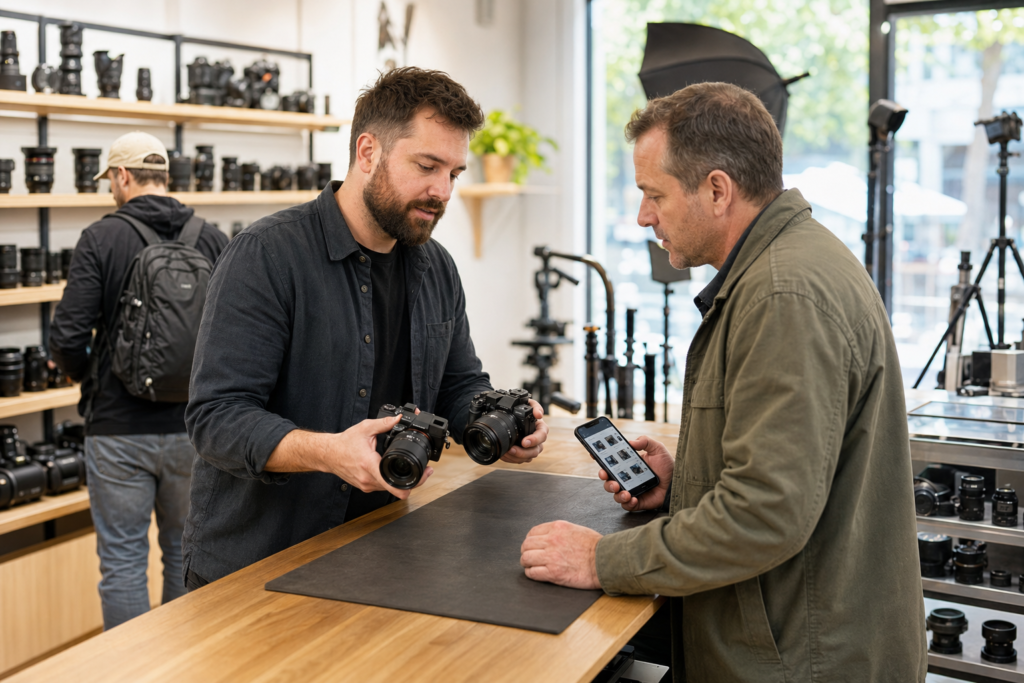
In-person demonstrations allow customers to assess controls, menu systems, grip size and viewfinder comfort. These physical differences may be difficult to evaluate through reviews or specification tables.
Retail staff can also help buyers identify supporting equipment that matches the intended use. A video creator may require different stabilisation, audio and storage options from a wildlife photographer or studio operator.
Advice must remain relevant and transparent. Customers are more likely to trust recommendations when staff explain practical differences without directing every enquiry towards the most expensive option.
Used Equipment Expands Customer Choice
Pre-owned equipment is becoming a more visible part of specialist retail. Used products can provide access to discontinued models, professional lenses and backup bodies at lower prices than current releases.
Condition grading is essential because cosmetic wear does not always indicate functional performance. Listings should identify marks, included accessories, shutter usage where available and any limitations that may affect operation.
Retailers commonly inspect equipment before accepting it for resale, although the extent of testing can vary. Clear warranty and return information helps buyers understand what protection applies to a pre-owned purchase.
Trade-in services can also support upgrades by allowing customers to offset the value of existing equipment against a new purchase. Transparent valuations and documented condition assessments make this process easier to compare.
Workshops Support Community Engagement
Physical retailers are expanding their role through product demonstrations, technical workshops and community events. These activities can help customers understand new equipment while creating reasons to return after an initial purchase.
Sessions may cover lighting, printing, colour management, video production or equipment maintenance. Brand representatives sometimes participate in launch events, giving customers opportunities to test products before committing to an unfamiliar system.
Workshops also connect beginners with experienced users. This community role is difficult for general marketplaces to reproduce and can strengthen relationships between retailers and local creative industries.
Repairs and Rentals Extend the Service Model
Service departments remain valuable when equipment requires sensor cleaning, firmware assistance or mechanical assessment. Retailers that coordinate repairs can provide clearer communication between customers and authorised technicians.
Rental services offer another practical option. Hiring equipment allows photographers to access specialised lenses, lighting or video systems for individual projects without purchasing items that may be used infrequently.
Some customers also rent a product before buying it, using a short assignment to evaluate real-world performance. Retailers can support this process with clear identification requirements, insurance conditions and collection procedures.
Retailers Balance Digital and Physical Service
Successful photography retail increasingly depends on consistency across online and in-person channels. Product pages must provide enough information for independent research, while staff remain available when a purchase requires technical guidance.
Fast shipping remains important, but convenience can also mean collecting an item locally, testing it before purchase or obtaining support after a problem occurs. Specialist businesses are positioned to compete when these services are easy to find and clearly explained.
As equipment becomes more interconnected, accurate advice and reliable local availability will remain commercially important. Retailers that combine detailed digital catalogues with knowledgeable service can support professionals, enthusiasts and first-time buyers without relying solely on price competition.